
Safety: Why Trained Crews Still Skip the Lock

Part 1 of a five-part series on SQDCP: safety, quality, delivery, cost, and people.
Every plant protects its people in layers: guards on the machines, interlocks, written lockout procedures, training, protective gear, and a supervisor walking the floor. Each of these layers has holes, but in practice it’s not a problem because the next layer usually covers them. Psychologist James Reason called this the Swiss cheese model of system accidents, and people get hurt when the holes in several “slices” line up.
Holes in some slices are easy to spot and close, like a missing guard or a bypassed interlock caught on inspection and fixed. Others are less predictable, like operator behavior, because whether a step like lockout gets done depends on the backlog, the staffing, and who’s watching. That behavioral slice is also the closest to the hazard, and the National Safety Council puts the societal cost of an injury that needs medical attention at $48,000, and a workplace death at $1.54 million.
Shrinking the behavioral holes means making lockout steps, for example, a habit, so they happen on the busy shifts too. If the goal is a habit, repetitions of the right behavior in the real work are crucial. That means giving people the chance to practice. One of the simplest ways is giving them short, specific things to do inside the jobs they already have, helping them focus on doing the small things the right way over time. Each shift becomes another chance to repeat the step the right way and to notice what gets in the way.
Why Lockout Still Gets Skipped
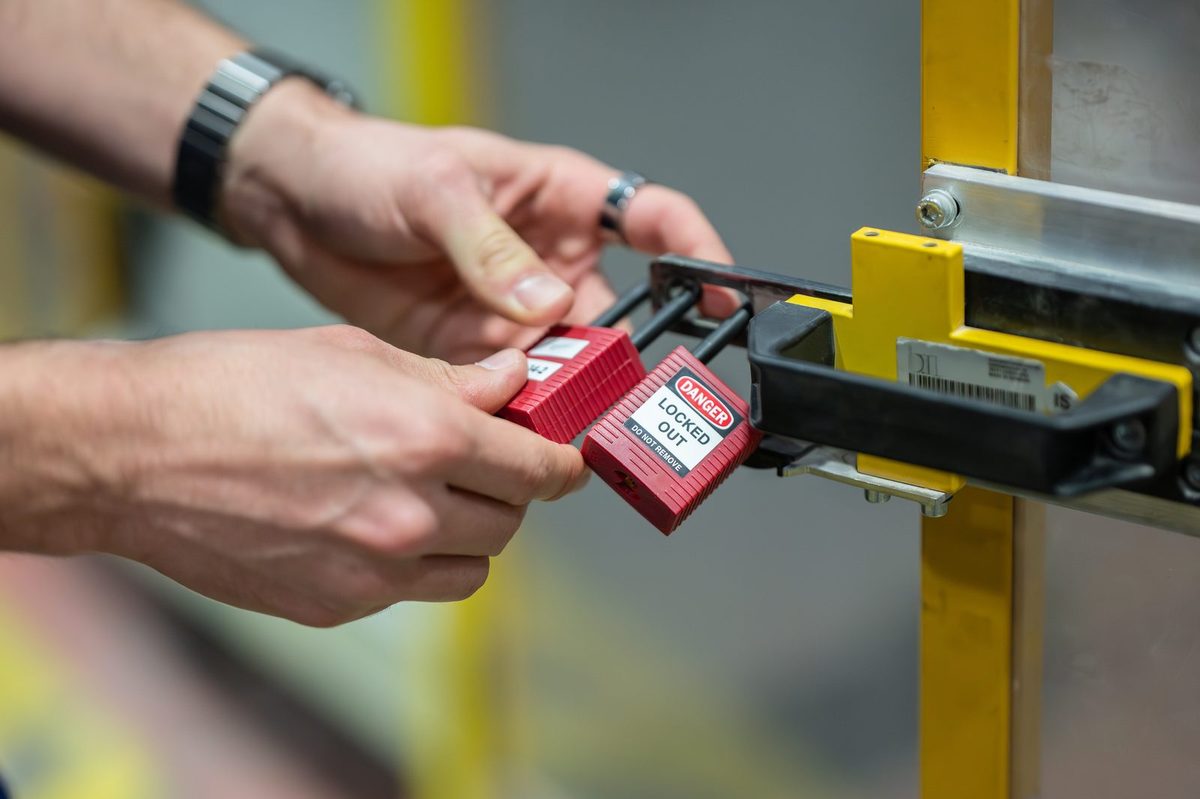
Lockout/tagout is about as simple as safety gets, and every maintenance crew is trained on it. The Occupational Safety and Health Administration (OSHA) estimates that compliance with its standard prevents about 120 deaths and 50,000 injuries a year. Yet it sits third on OSHA’s preliminary list of most frequently cited standards for fiscal 2026, so lockout programs break down at many plants.
Reason called a skipped step like this an “active failure,” an unsafe act by the person closest to the hazard. A trained tech skips the lock when they’re sure the machine will only be open for a second, on a night with a long backlog and nobody nearby. That hole opens and closes all day, so an annual audit, an observation card, or a certification only shows where it was when someone was watching.
Behavior is the slice where the holes move.
Safety training is where people learn what the lock is for and how to find every energy source, and nobody should be near a machine without it. So if everyone has been trained, why does the lock still get skipped? Knowing the procedure gets settled in the training room, but doing it at three in the morning on a short-staffed shift gets settled on the job.
Practice Where the Habit Has to Hold
Nobody learned to buckle a seatbelt from a slideshow. It became automatic because people did it every time they got in the car, and most of what people learn about a job is learned the same way.
A few examples of practice activities, each one a repetition done during that week’s jobs:
- Before opening a guard, name every energy source on that machine to the person beside you.
- After placing your lock, try the start control before any hands go in.
- Note one place this week where locking out took too long, and what got in the way.
An operator does the activity, says how it went and if anything got in the way, and their supervisor can see and approve what they said. Over a series of weeks, the lock goes on more often on the shifts when it used to get skipped, and that hole shrinks.
What Gets in the Way
Skipped locks don’t all have the same cause. Sometimes a person knows the step and still skips it, or falls back on an old shortcut when the backlog is long. Other times they would do it if something practical weren’t in the way. Those barriers are what Reason called “latent conditions,” holes built upstream by whoever designs the equipment, writes the procedures, and sets the schedule.
Going through the activities in the flow of work, then reporting back on what happened, has the benefit of surfacing hidden barriers. The lock station is at the far end of the line, the machine has three energy sources while the procedure lists two, or the schedule allows no time for isolation during a changeover. An inspector rarely sees these, because they show up only when someone tries to do the job right under time pressure, and a long walk to the lock station never feels like a near miss worth writing up.
The same thing happens outside safety: when one automotive component manufacturer had its team leads and supervisors practice floor behaviors and write down what got in the way, they surfaced dozens of equipment and tooling problems, and some led to fixes at the source. Reason’s point was that latent conditions, unlike active failures, “can be identified and remedied before an adverse event occurs.” Asking operators what gets in the way adds a powerful mechanism for identifying holes in the system.
Measuring Behavior Change
When it comes to safety, what matters is whether these behaviors are changing and the holes, or risks, are reducing. So measure the behavior. A supervisor can rate each person’s lockout practice before the activities begin and again at the end of the quarter. Each person can rate themselves on the same measures, giving two readings of the same change. Along the way, supervisors can confirm from what they see whether someone now tests for zero energy every time.
Then tie the change to numbers the plant already keeps: recordables, first-aid cases, near-miss reports, and repeat safety-walk findings. Near-miss reports may rise before injuries fall, because people are now reporting holes they can see.
The same process also shows what’s blocking the change. Bring the reported barriers to the plant manager or into the safety walk or tier meeting. Rank them by risk, start the work, and count the fixes.
Shrinking the Holes
Of the five SQDCP pillars, safety is the one where a single skipped step can cost a life. Practice on the job makes the holes in the behavior slice smaller, and because it happens inside work people already do, it costs little. And the feedback mechanism identifies the barriers upstream while there’s still time to fix them.
About the Author
James Glover is CEO of Flint Learning Solutions, where he helps manufacturers solve business challenges through behavior change, using AI-personalized, on-the-job activities that integrate seamlessly into daily work. He has spent more than a decade using machine learning to predict and change behavior across industries including financial security, marketing technology, and manufacturing.